

Mentalist for Corporate Events
Psychological Entertainment That Transforms Audiences
Discover how a world-class mentalist blends psychology, perception, and performance to create unforgettable corporate experiences that inspire connection, focus, and belief.
When Entertainment Stops Being a Break… and Becomes the Breakthrough
As a mentalist for corporate events, I’ve seen firsthand how a single performance can transform an entire room. I still remember the first time a senior executive pulled me aside after a show
Not to ask how the effects worked.
Not to compliment the show.
But to say this:
“Something shifted in the room tonight. People are talking to each other differently.”
That moment has repeated itself for years — across boardrooms, conferences, gala dinners, leadership retreats, and high-pressure corporate environments.
And it reveals something most people misunderstand:
A true mentalist for corporate events isn’t there to distract people from work.
They’re there to re-align people to possibility.
This is not party magic.
This is not filler entertainment.
This is psychological performance designed to move human beings.

What a Corporate Mentalist Actually Is (And What They’re Not)
A professional mentalist operates at the intersection of:
Human psychology
Perception and decision-making
Behavioural influence
Emotional memory
Unlike traditional magicians who focus on visual impossibilities, a mentalist works inside the mind — revealing how thoughts are formed, assumptions are made, and beliefs are quietly shaping outcomes every day.
In a corporate environment, this matters deeply.
Because:
Every business runs on decisions
Every team runs on perception
Every culture runs on belief
A mentalist doesn’t “trick” an audience.
They mirror the way the mind already works — then gently expose it.
That’s where the impact lives.
Why Corporations Choose Mentalism Over Traditional Entertainment
Corporate audiences are different.
They are:
Analytical
Results-driven
Time-pressured
Experience-savvy
They’ve seen:
The motivational speaker
The comedian
The standard keynote
The predictable entertainment slot
Mentalism cuts through because it respects intelligence.
Instead of telling people what to think, it allows them to experience insight.
Instead of motivation by hype, it creates motivation through realisation.
Instead of applause alone, it creates conversation long after the event ends.

What Happens During a Mentalist Performance at a Corporate Event?
No two performances should ever look the same — and that’s intentional.
A well-designed corporate mentalism experience typically includes:
• Interactive Psychological Demonstrations
Audience members don’t watch — they participate.
Decisions are influenced. Thoughts are revealed. Assumptions are challenged.
• Moments of Shared Astonishment
Entire rooms experience the same impossibility at the same time.
This builds collective emotional memory — the foundation of team bonding.
• Subtle Leadership and Behavioural Insights
Without lecturing, the performance reveals:
How easily perception can be shaped
Why clarity matters
How belief impacts performance
Why trust changes outcomes
• A Shift in Energy
Rooms open up.
Walls come down.
People reconnect — with each other and with themselves.
The best feedback is often this:
“That didn’t feel like entertainment… it felt like an experience.”
Who Is a Corporate Mentalist Best Suited For?
Mentalism works exceptionally well for:
Strategy sessions
Year-end functions
Awards evenings
Brand launches
High-level client events
Incentive travel experiences
Faith-based leadership gatherings
It is especially powerful for organisations that value:
Culture
Trust
Innovation
Human connection
Purpose-driven leadership
If your audience is intelligent, experienced, and values meaning — mentalism meets them where they are.
The Psychological Power Behind Mentalism
At its core, mentalism leverages principles already proven in psychology and behavioural science:
Pattern recognition
Cognitive bias
Expectation framing
Emotional anchoring
Selective attention
When these principles are brought to life viscerally — not academically — something powerful happens:
People feel insight instead of merely understanding it.
And what we feel, we remember.
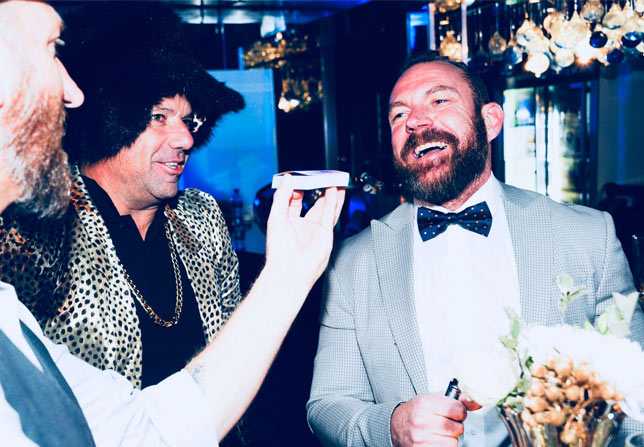
What Makes My Approach Different
Many performers can learn techniques.
Very few can design experiences.
My work is shaped by several uncommon elements:
• Endurance & Mental Discipline
Years of endurance performance taught me what happens to the mind under pressure — and how belief determines outcome when comfort disappears.
• Psychological Design
Every performance is structured intentionally.
Nothing is random. Nothing is filler.
• Faith-Driven Purpose
Transformation matters more to me than applause.
Impact matters more than ego.
• Customisation
Corporate mentalism should never be “one-size-fits-all.”
Each experience is shaped around the audience, environment, and intention of the event.
• Global Sensitivity
Different cultures respond to different cues.
Mentalism transcends language when designed correctly.
This is why my work is often described as transformational entertainment rather than performance alone.
Mentalism and Leadership: Why the Fit Is Natural
Leadership lives in the invisible:
Trust
Influence
Perception
Confidence
Decision-making
Mentalism makes the invisible visible.
When leaders see — in real time — how easily perception can shift, how quickly belief can be shaped, and how powerful alignment becomes, insight lands deeper than any slide deck ever could.
This is why mentalism pairs so naturally with:
Change management moments
Frequently Asked Questions
How long is a typical corporate mentalist performance?
Most performances range between 30 to 60 minutes, depending on the event format. Shorter segments can also be integrated into conferences or gala evenings.
Can the performance be customised for our brand or message?
Yes. Customisation is one of the defining strengths of this work — from language and tone to themes and audience interaction.
Is mentalism suitable for international or multicultural audiences?
Absolutely. When designed properly, mentalism transcends language and culture by focusing on universal human behaviour.
How large can the audience be?
Mentalism works for intimate executive groups and large conference audiences alike. Scale is a design decision, not a limitation.
Is this motivational speaking?
Mentalism is not motivational speaking — but it often produces motivation through experience rather than instruction. It pairs exceptionally well with keynote sessions.
The Outcome That Matters Most
People won’t remember every detail of your event.
But they will remember:
How they felt
What shifted
The moment something clicked
A powerful corporate mentalist doesn’t just entertain your audience for an hour.
They leave a psychological fingerprint.
Ready to Design Something Extraordinary?
If you’re looking to create a corporate experience that feels intelligent, intentional, and genuinely impactful — not just impressive in the moment — then mentalism may be the missing piece.
If you’re ready to design an experience your audience will still talk about years from now, let’s create something extraordinary together.
Welcome to my world!

Want exclusive insights, news, offers and more?
Sign up to our mailing list to stay updated of special news, offers and events.